[ home ] [ XML ]
News & Events
Artistic Research Science Fair at MoMA

Attention!
I’m excited to be taking part in an Artistic Research Science Fair at the Museum of Modern Art on April 18. I’ll be in front of a classic 3-paneled presentation board showing some aspects of a long-running research project on the topic of attention.
Artistic Research Science Fair at MoMA
D. Graham Burnett, Sal Randolph, Steve Rowell, Brooke Singer, and Alexandra P. Spaudling
Thursday, April 18, 2013, 12:30–2:00 p.m.
Education Classroom B, mezzanine, The Lewis B. and Dorothy Cullman Education and Research Building
Art in the Long View at Lunchtime
In conversation with artists and MoMA Lecturers, explore long-term, process-based art and its impact on the experience of art. While many artists establish concrete goals, the processes we are interested in examining may span the lifetime of the artist, require ongoing participation or discussion, and be linked more to research and exploration than to a pre-established plan. Bring your lunch and discover how these challenges to the constraints of time and the expectations of final product and finality force viewers and participants to reconsider the role of art in society. This series serves as an incubator of ideas in advance of our upcoming Contemporary Art Forum on May 2 and 3.
Join us for an interactive lunchtime session featuring artists who explore the creative possibilities of sustained investigation. Following the model of a science fair, research-artists Sal Randolph, Steve Rowell, Brooke Singer, and Alexandra P. Spaudling will set up individual stations and offer reports on their results to date. Prepare for presentation boards, poster talks, and engaged conversation!
The included projects are long-term, multifaceted endeavors that are rarely represented in traditional venues such as museums or galleries, making this session a unique opportunity to learn about them through a direct dialogue with their creators. The program concludes with a round-table conversation among the artists, moderated by D. Graham Burnett, focusing on such questions as: Can science and scholarship be the medium of the artist? What can be learned from the contrast between the creatively driven approach of artistic research and the focused methodology of empirically oriented investigative practices? What happens at the intersection of precise knowledge and infinite possibility?
D. Graham Burnett is an editor at Cabinet magazine and teaches at Princeton University. He is the author of five books, most recently The Sounding of the Whale (Chicago, 2012). He and W. J. Walter are the creators of “Novelchess,” a system for translating literature into chess matches.
Tickets are free but required and can be acquired on a first-come first-served basis online or at the information desk, the Film desk after 4:00 p.m., or at the Education and Research Building reception desk on the day of the program.
To pick up tickets acquired online, proceed to the Education and Research Building reception desk at 4 West 54 Street beginning at noon on the day of the program.
[ more information ]

Matters of Attention, Spring 2013

I’m teaching this spring as a fellow of the Interdisciplinary Doctoral Program in the Humanities at Princeton University. The class, created in collaboration with D. Graham Burnett, is called “Matters of Attention”:
Attention, regulating what enters consciousness, lies at the nexus of perception and action, aesthetics and ethics. This course will move from a history of changing ideas about attention, through current research, and on into the implications for seeing and experiencing as modes of being. Since works of art can be understood as reified requests for attention, we will take them as important case studies in the investigation of what attending has meant and can mean. Consideration will be given to the training and altering of attention, to spectacle and the manipulation of attention, and to the shifting economies of attention in the modern period. Some attention will be given to attention’s dialectical antitheses: distraction, secrecy, and invisibility. Ultimately, we will seek to understand (and experience) the role of attention in both the cognitive and the affective domains.
Further information: HUM 580, Matters of Attention
Rover Dig, Cambridge MA, 3/7/2013

Rover Dig (RD)
opening | reading
March 7, 2013 | 6pm
Jeff Dolven & Sal Randolph
54 Roberts Road
Apartment #3
Cambridge, MA 02138
Sal Randolph’s Ambience Scores for Public Spaces on view through May 1st, 2013.
Rover Dig brings together artists and writers for small exhibitions and readings in residential rooms. RD is conceived as an intimate alternative to a more formalized venue, and is intentionally more homey than hip.
Please contact
roverdig@gmail.com
for more information.
Mildred's Lane 2013

Mildred’s Lane is seeking fellows for the 2013 summer season, which will include a week-long session with the Order of the Third Bird. If you are affiliated with an institution (for instance an art school) which might be able to provide support for fellows, you are keenly urged to spread the word, and pass on the Mildred’s Lane 2013 Summer Session packet found [ here ]. Now is the time to apply for or organize institutional support. Independent fellows/students are also warmly welcomed. For further information on Mildred’s Lane, and on how to apply, visit mildredslane.com
August 5-11: Attention Lab with The Order of the Third Bird
In this week-long session, indiscreet associates of The Order of the Third Bird (including D. Graham Burnett, Jeff Dolven and Sal Randolph) will continue their investigations into experimental protocols of Practical Aesthesis and methods of Sustained Attention. The Attention Lab is part guerrilla seminar and part meditative and kinetic practicum. A discipline of the senses is pursued. Temporary metempsychosis can occur, but must not become permanent. Topics for the session will include an investigation into time in relation to works of art; speed and slowness, ritual and cyclic time, memory, presence, the instantaneous, vigilance, and the play of time-based works against durational experience will be explored. Beginning with available traditions and protocols of the Order, the group’s aim will be to develop and test new experimental practices of attention.

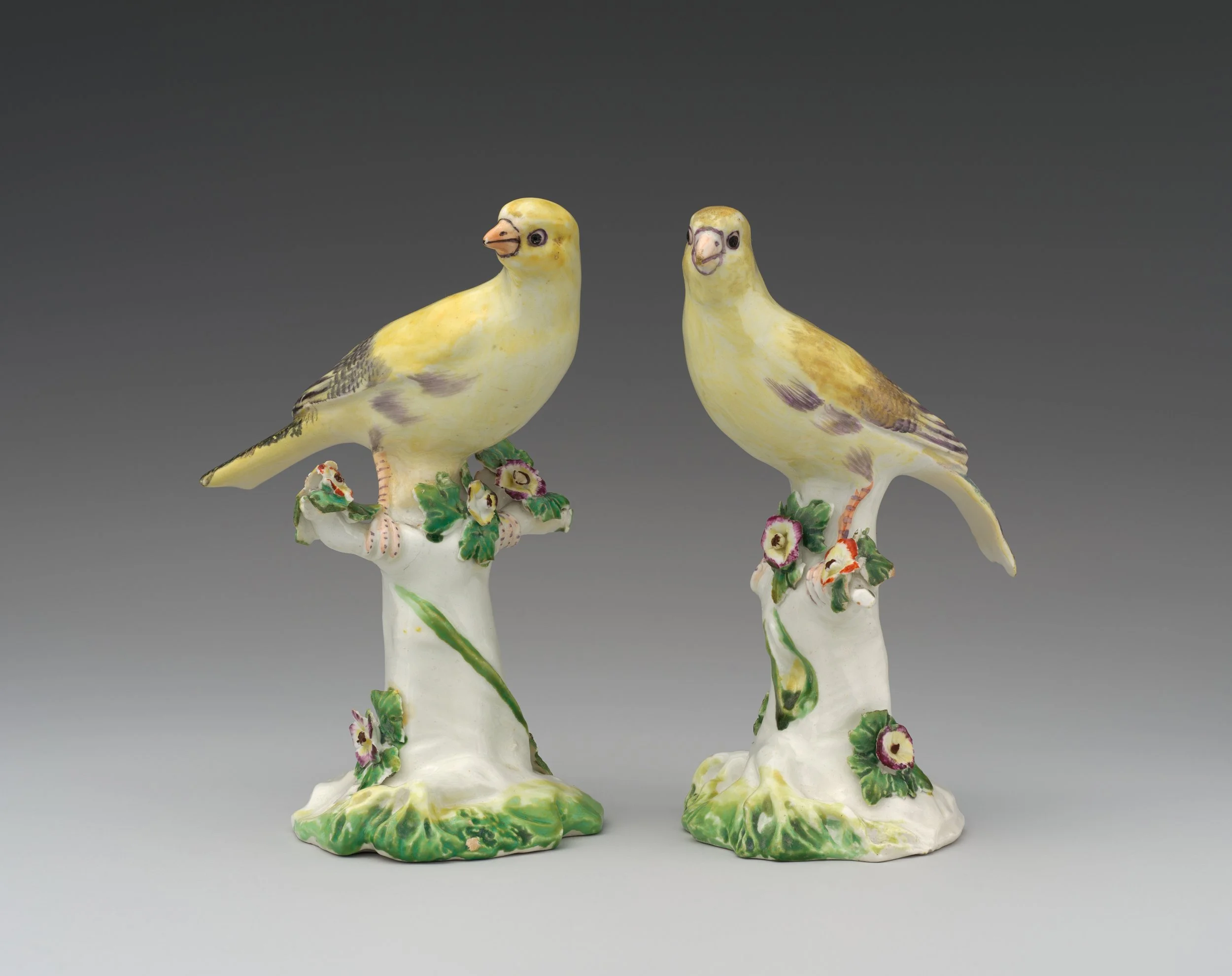
The Order of the Third Bird
There remains some confusion about the history and practices of the body known as The Order of the Third Bird, but evidence points to its having been for some time a network of cell-like groups that engage in ritualized forms of sustained attention to works of art. The canons of secrecy around these activities—their structure and purposes—have traditionally been sufficiently restrictive as to leave some doubt as to whether any individual profession knowledge of the Order could in fact be genuinely associated therewith.
Be that as it may, public activities conjectured to be not utterly dissimilar to doings of the Order have been reported variously at the Arts Writers Convening, Bard Graduate Center, Emily Harvey Foundation, Harvard’s Visual and Environmental Studies program, Haverford College, ICA Philadelphia, Milwaukee Art Museum, MoMA Studio, and the Santozeum on Santorini Island.

Bios
D. Graham Burnett is an editor at Cabinet magazine, in Brooklyn, and a member of the faculty at Princeton University. He studies the relationship between power and knowledge, and writes on human beings’ changing understanding of the natural world. Burnett was a Marshall Scholar at Trinity College, Cambridge, where he completed a Ph.D. in the History and Philosophy of Science, and he is the author of four books, including Descartes and the Hyperbolic Quest (2005) and Trying Leviathan (2007), which won the New York City Book Award.
Jeff Dolven teaches Renaissance literature, poetry, and poetics at Princeton University. He is the author of Scenes of Instruction (U of Chicago Press) and a book of poems, Speculative Music (Sarabande, forthcoming), and he is an editor at large at Cabinet magazine.
Sal Randolph lives in New York and makes artworks involving gift economies, social interactions, public spaces and publishing, Her Money Actions have been seen recently on the streets of New York and Venice, at the Ljubljana Biennial, and in No Longer Empty’s takeover of an abandoned bank building in Long Island City. Her typewritten text drawings have appeared at Soapbox Gallery in Brooklyn, at the Göttingen Kunstverein, and have been performed live at the Cantor Fitzgerald Gallery at Haverford College. She is currently investigating experience, value, games, play, and language.
How Much Do I Owe You? 12/12-3/13

I’ll be giving away and receiving money in a new piece “Give & Take,” as part of the exhibition “How Much Do I Owe You?” opening December 12, 2012. “How Much Do I Owe You?” is a site specific exhibition in a former bank, curated by No Longer Empty at the Clock Tower Building, Queens Plaza North in Long Island City.
12.12.12 to 3.13.13
Thursday- Monday, 1 – 7pm
At The Clock Tower
29-27 41st Avenue, Long Island City, Queens
Opening Reception is Wednesday December 12th, 7 – 9pm
Special Remarks by Council Member Jimmy Van Bramer

How Much Do I Owe You?
The iconic The Bank of Manhattan Building in Queens Plaza North was built in 1924 and stood as the tallest building in Queens until 1990. Now this architectural gem will be the host to No Longer Empty’s 14th exhibition How Much Do I Owe You?
Inspired by the bank, 26 artists from 15 countries will transform the building’s vaults and lock boxes into immersive installations. With large scale sculptures, video works, participatory projects, and murals, the exhibition is a truly diverse and global look at exchange, value, and currency.
FEATURED ARTISTS
Sol Aramendi, Artefacting, Orit Ben-Shitrit, Alberto Borea, Susanne Bosch, Marco Antonio Castro, Jennifer Dalton, Nicky Enright, Colleen Ford, F.R.E.E. LIC Branch Bank of America-Draw Deposit Display Station, Ghost of a Dream, Guerra de la Paz, Susan Hamburger, Erika Harrsch, Pablo Helguera, Chris Jordan, Hayoon-Jay Lee, Shaun Leonardo, Leonidas Martin, Keiko Miyamori, Paulette Phillips, Ana Prvacki, Sal Randolph, Sean Slemon, Theodoros Stamatogiannis, Tom Sanford, & Caroline Woolard.
No Longer Empty
Experiential Art Festival

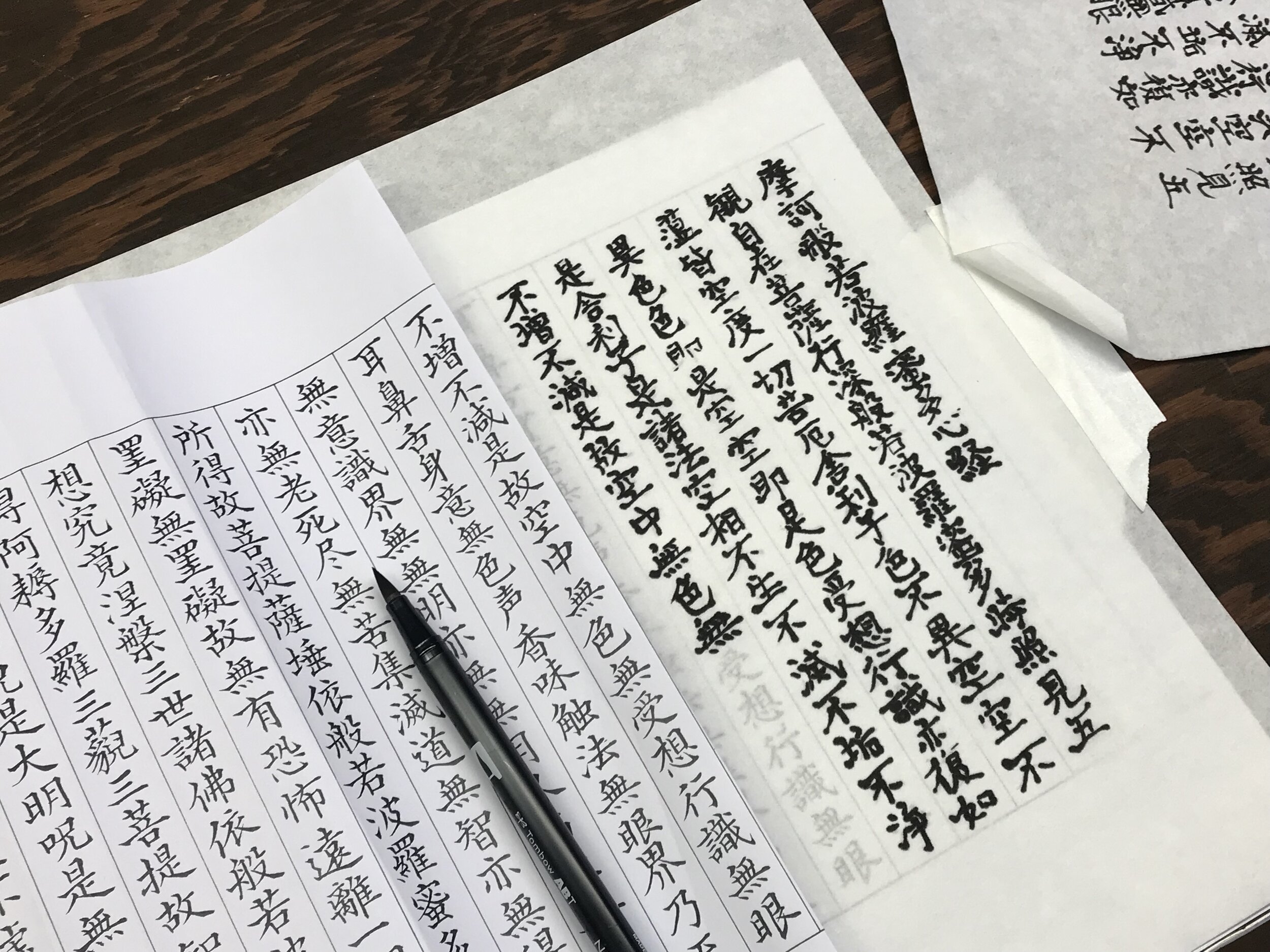
November 1st, 2012, I was one of 23 participants in “Experiential Declarations,” the First International Experiential Art Festival, organized by Lee Walton for RAYGUN Projects in Toowoomba, Australia.
My declaration (pictured above) was:
“On November 1 I will sit on a cushion on the middle of my floor and read Three Pillars of Zen. Next to me will be an empty tea cup; I will not drink tea. I will do my best not to read the titles of other books in the room when I glance up accidentally.”
Experiential Declarations
23 Participants scripted and declared an experience they will have in the future. Each taking place on November 1st, 2012, these declarations frame the exact time, place and action of a specific experience. Prior to November 1st, each participant will play out their own scripts across distant locations – alone yet connected to one another through the celebratory act of the everyday.
The project is part of The First International Experiential Art Festival. conceived by Lee Walton for RAYGUN as part of ‘The Range’ Arts and Culture Festival curated by Ashleigh Bunter.
Birds at MoMA Studio 10/20 Noon-4pm

An Action Not Unlike A Vigil:
The Order of the Third Bird at MoMA Studio
Saturday, 10/20 Noon-4pm & Friday 11/9, Noon-4pm.
In conjunction with Mildred’s Lane and the Mildred Complex(ity).
Indiscreet associates of the Order of the Third Bird will engage in a practice of Sustained Attention to a Made Thing at the MoMA studio from noon to 4pm. Visitors are welcome to stand with members of the Order and join in giving generous attention to the work.
Saturday, 10/20, Noon-4PM & Friday 11/9 Noon-4pm.
MoMA Studio,
Lewis B. and Dorothy Cullman Education & Research Bldg.
4 West 54 St.
(Note: Entrance on 54th street between 5th & 6th Aves).
Admission to the exhibition is free.

[pictured: Order of the Third Bird action taking place on Fritz Hague’s “Domestic Integrities” rug at the Common Senses Exhibition, MoMA Studio 10/20/12]
The actions are part of a series of Swarmings organized by Mildred’s Lane and the Mildred Complex(ity) for the exhibition Common Senses at the MoMA Studio.
About Mildred’s Lane and The Mildred Complex(ity)
“What is it that we need to learn in the 21st century?” J. Morgan Puett of Mildred’s Lane and the Mildred Complex(ity) poses this question to visitors of MoMA Studio in a series of events and a workshop space. Based in northeastern Pennsylvania, Mildred’s Lane is a working-living-researching environment made up of a community of artists interested in fostering new modes of social engagement with every aspect of life. From discussions to meals, interactions at MoMA Studio focus on our relations with each other and our environments, systems of labor, and aspects of holistic living as they relate to contemporary culture. Gleaning from her sense of aesthetics and design, Puett’s installation and living archive invites visitors to explore inventive forms of domesticity, tactile qualities related to textiles, and the natural states of food—gathered from Fritz Haeg’s Domestic Integrity Field Part A-1, also a part of MoMA Studio—while fellow artists invite the public to engage in their practice on frequent, impromptu visits.
$ on Culturehall

“The Emancipation of Money” and other money actions are part of a new feature titled “$” on Culturehall, curated by David B. Smith. The feature also includes Abigail Satinsky and InCUBEATE, Destineez Child, and Cassie Thornton.
Smith writes: “$ is a social contract – an abstraction of exchange. There is no limit to its use or value. However, seemingly natural models of exchange ingrained in culture seamlessly pave the way for relationships that serve few and exploit many. $ has a way of protecting its own value — by marginalizing and discrediting those that do not have much of it, or who question its absolute value.” [ read more ]
At Kunstverien Göttingen 8/26-10/21

A new series of Ambience Scores will be part the show “We Notice No Disturbances” at Kunstverein Göttingen from August 26 through October 21, 2012.
Ambience Scores for Public Spaces
Ambience scores are transcriptions into language of the ordinarily unheard sounds of place. From this alphabetically rendered sound composition, places could then be performed as voice or in imagination. The originating moments they capture are ephemeral and unrepeatable; transcription errors are inevitable, but every attempt at the impossible task is made.
The places represented here are all sites of public protest in New York: places where the question of what is permissible in public space has been contested during demonstrations, riots, and public gatherings. Field recordings were made to capture the contemporary sounds of these locations: passing cars, horns, the screech of brakes, voices, musical instruments, bird sounds, barks, clatters, rustlings. The recordings were then transcribed on a manual typewriter and the resulting score becomes a kind of index of the daily life of places in which public dramas have once played out.
Central Park, Sheep Meadow (1968 “be-ins”)
Grand Army Plaza (2003 anti-war march)
Madison Square Garden (2004 Republican National Convention demonstrations)
Maiden Lane (1712 New York slaves’ revolt)
Museum of Modern Art (1970 Art Workers Coalition Art Strike)
Saint Patrick’s Cathedral (1989 ACT-UP demonstration)
Stonewall Inn (1969 gay rights riot)
Times Square (2011 anti-greed demonstrations)
Tompkins Square Park (1874 worker’s riot)
Union Square (1905 suffragette rally)
Washington Square Park (1961 beatnik musician riot)
Zuccotti Park (2011 occupation)

We Notice No Disturbances
26. August – 21. Oktober, 2012
Song-Ming Ang (SGP)
Kajsa Dahlberg (S)
Jeremiah Day (USA)
Julien Grossmann (F)
Sven Johne (D)
Sal Randolph (USA)
Tomáš Werner (SK)
Kuratiert von Laura Schleussner
Altes Rathaus
Markt 9
37073 Göttingen
Öffnungszeiten Di-So 11-17.00 Uhr
In Kooperation mit Fachdienst Kultur der Stadt Göttingen
VERNISSAGE
Sonntag, 26. August um 11.30 Uhr
We Notice No Disturbances
The antiquated novelty of the sound-postcard – a postcard and 45 record in one – is the point of departure for considering an exhibition dedicated to the art of bridging the distance of time or geography through sound; it embodies the notion of the sonic image, the transmission of a personal message through word and song. Naturally, the postcard also automatically connotes travel. It implies the touristic ritual of the brief message and bright-colored image sent as a testimony of the places visited.
The works in the exhibition reflect the experience of travel in an age of interconnectivity, when the stories of one place often collapse into the histories of another. The touristic experience is reflected as no longer being completely “innocent” or unburdened. As a highly evocative medium, sound lends an emotional layer to the experience of a place or a place in time. As music it can have an enchanting, mesmerizing effect, or as found footage it can rupture a sense of the exotic or the sublime. The element of notation on place – as a text or musical score – is inherent to all the works presented, in which personal narrative or individual approaches to sound serve to heighten the experience of a distant site as forms of improvisation, critique, or resonating memory.
In Song-Ming Ang’s You and I (2009-) the artist asks members of the public to write him letters telling him a few personal things about themselves – memories, compulsions, experiences, secrets, ambitions, etc. Based on the contents of the letter, he makes a personalized mixtape (in the form of a CDR) and mails it to the sender as a response. These letters and the CDs are then exhibited with the permission of the participants.
Ang’s video Be True to Your School (2010) originated from his residency in an old school building in Japan. The artist invited former students of the elementary school to sing their school song in front of a camera. They were first recorded on video individually, many of them pausing and struggling to remember the lyrics. Subsequently the participants were invited to sing the song as a group. Ang filmed this chorus, which he accompanied on a glockenspiel.
Kajsa Dahlberg’s installation We notice no disturbances, all are happy and friendly, (Postcards from Jerusalem 22/4 1911–24/1 1999) consists of some 600 postcards sent over a ninety-year period from Jerusalem to Sweden. The artist came across these cards while researching a group of Swedish Christian settlers in Palestine, who began producing postcards for economic survival. Even with their brief messages, the postcard archive chronicles the changing times and historical conflicts that have marked Jerusalem over the decades.
Jeremiah Day’s work No Words for You, Springfield is a cross-Atlantic exploration taking the form of 16 photographs and a performance documentation. Attempting to trace the mass migration of Irish from the Blasket Islands to the US town of Springfield, Massachusettes, Day found that no discernable culture or tradition from Ireland has been preserved in the new world. Instead he encountered the decay endemic to American post-industrial cities. Documentations of Springfield’s urban ruin, Day’s photographs are inscribed with hand-written text; theyparalleling the ruins on the Blasket Islands, which were evacuated in the 1950s. Through the printed interview Springfield-based historian Douglas Valentine the work assumes an almost archaeological dimension — lyrically probing the depths of the American political psyche.
Julien Grossmann has worked extensively with early ethnographical recordings and music from across the globe. For his work KOKIN (…) SLENDRO Grossmann has created his own compositions based on different tonal systems throughout the world. These were pressed onto records, which double as miniature, white islands suggesting very different types of landscapes. The records play almost magically in succession, with each island rotating around its own access to emit a series of highly diverse soundscapes.
Sven Johne’s recent work has dealt with the island of Lampedusa and the paradoxes of the island as both a tourist destination and a site where innumerable refuges from Africa have landed—or died just before reaching its shores. The photographic series Traumhotels taken from the window of a humble hotel runs counter to idealized images of a Mediterranean paradise and suggests other, more ominous realities.
Sal Randolph’s Ambience Scores are transcriptions into language of the ordinarily unheard sounds of place. They are alphabetically rendered sound compositions, which can be “read,” allowing place to be performed as voice. Made on a portable manual typewriter, the Ambience Scores on view have been created for the exhibition at specific public sites in New York, which have in some way been politically contested. The series of work as a whole follows Randolph’s ongoing studio practice of “Language Drawing” and is a continuation of her interest in instructional art.
Truly a contemporary take on the sound postcard, Tomáš Werner’s Landscape Spectacle is a video work that was created during the artist’s visit to the Grand Canyon. A static shot of the majestic landscape is on view, while in the background one hears a multitude voices from the masses of tourists coming and going from an apparent lookout site – a concert of languages and exclamations lasting half an hour.
Kunstverein Göttingen
Gotmarstrasse 1
37073 Göttingen
Tel: 0551 44899
Fax: 551 – 50 84 654
info@kunstvereingoettingen.de
www.kunstvereingoettingen.de
Bureau at Proteus - opening July 6 at 7PM

Voyagers & Friends!
The Bureau will be part of the Proteus Gowanus Artists in Residence Show, opening Thursday July 6th, 6-8PM. Here’s a chance to read some of the voyager’s notebooks and meet friends of psychogeographic travel. Along with the Bureau, the show will feature Proteus Gowanus’ other recent artists in residence: Lado Pochkhua, and Eben Kirksey. The results of all three residencies will be on display, and we’ll be there to share a glass of wine with you. The exhibition will be on view through July 14.
Opening Reception
FRIDAY July 6, 7pm
no rsvp needed, friends welcomed
Exhibition
July 6 – July 14
The Galleries and Projects-In-Residence are open Thursday & Friday 3-6pm, Saturday & Sunday 12-6pm.
Proteus Gowanus
543 Union (down the alley off Nevins)
Brooklyn

Keep Traveling
Psychogeographic Destination contain everything you need to start your own voyage to an unknown destination. Download them free from unknowndestinations.org.
All travelers are welcome and encouraged to keep sending notebooks, images, video, words, commentaries, bits of paper, etc., to the Bureau by envelope, email or in person.
Curious about the experience of other travelers?
Ayun Halliday made a zine from her adventures in Patchogue and is selling it on Etsy.
Sean Curry described his trip to Beacon in The Inclusive (Part One: The Sense of Adventure, Part Two: Looking for a Beacon).
Bradley Cohen told the story of his day in Oyster Bay for the BBC Travel Blog.
Michael Castillejos made a video essay of his trip to Babylon.
Notebook images above: Jessica Harrison & Russel Geler’s trip to Glen Cove (top) and Giorgio’s trip to Ronkonkoma (below). These and other notebooks will be on view in the show at Proteus Gowanus July 6-14.
[ Bureau of Unknown Destinations ]
Order of the Third Bird at Mildred's Lane

There are still a few spots open for students/fellows during The Order of the Third Bird’s July session at Mildred’s Lane. Interested persons should apply directly to Mildred’s Lane with some alacrity.
Attention Labs with The Order of the Third Bird at Mildred’s Lane, July 9-15, 2012
In an upcoming session at Mildred’s Lane, indiscreet associates of The Order of the Third Bird (including D. Graham Burnett, Jeff Dolven and Sal Randolph) will continue their investigations into experimental protocols of Practical Aesthesis and methods of Sustained Attention. The Attention Lab is part guerrilla seminar and part meditative and kinetic practicum. A discipline of the senses is pursued. Temporary metempsychosis can occur, but must not become permanent. Topics for the session will include attention, inattention, surprise, vigilance, invisibility, ritual, representation, presence and performance. Is a choreography of the gaze possible? Desirable? Positions on these problems (and others) will be solicited, submitted to collective scrutiny, and tested against the available traditions and protocols of the Order.
UPDATE: Associates of the Order will be joined for the week by Jac Mullen representing the editorial committee of ESTAR (currently at work on newly uncovered historical documents related to the origins and activities of the Order), as well as recent Mildred’s Lane Fellows, artists Rory Parks and Helen Miller.
The Order of the Third Bird
There remains some confusion about the history and practices of the body known as The Order of the Third Bird, but evidence points to its having been for some time a network of cell-like groups that engage in ritualized forms of sustained attention to works of art. The canons of secrecy around these activities—their structure and purposes—have traditionally been sufficiently restrictive as to leave some doubt as to whether any individual profession knowledge of the Order could in fact be genuinely associated therewith.
Helen Miller
Artist-in-Residence, Helen Miller explores human movement in the context of visual art and literature, most recently pairing formalized sequences from dance and exercise with Beckett’s “Play” and Sappho’s Fragment 16. In support of Bird practice this week, she will lead a series of site-specific movement lessons drawing on the Feldenkrais Method of somatic education.
Mildred’s Lane
MILDRED’S LANE is a rustic, 96-acre site deep in the woods of rural northeastern Pennsylvania, in the upper Delaware River Valley, which borders New York state. It is an ongoing collaboration between J. Morgan Puett, Mark Dion, their son Grey Rabbit Puett, and their friends and colleagues. It is a home and an experiment in living. Mildred’s Lane attempts to coevolve a rigorous pedagogical strategy, where a working-living-researching environment has been developed to foster engagement with every aspect of life.
The entire site has become a living museum, or rather – a new contemporary art complex(ity). It is now important to sidestep the debates around what is art ( or design, architecture and fashion) in order to activate these turbulent multiplicities. It is more a question of praxis and action, is it in an institution? Storefront? A gallery? Deep in the woods? At Home?
The Mildred’s Lane site is a home where the Artist/Practitioner, the Student and the Institution have collapsed roles as they attempt to coevolve with an emergent strategy. In conversations with friends and colleagues – who teach and administer theory and practice in a variety of institutions– the frustrations and limitations of conventional, visual art programs and other pedagogies become apparent. However, there is a new excitement to explore alternatives to the way we research-work-live. Mildred’s Lane welcomes this “new age of curiosity” by activating connections that situate themselves at the nexus of science, methods of living, environmental activism, transhistorical and critical artistic practices. This unusual situation affords participants the ability to collaborate in the production of large-scale, socially charged, research- driven projects within a truly transdisciplinary environment. Woven into the project work is a curriculum based on creatively and experimentally living and working together – what we call workstyles. These valuable collaborations are designed to become shared experiences that hope to have transformative and lifelong effects on how artists think of themselves as practitioners functioning in the world.
re/spond/re/peat at Soapbox June 8-21

I’ll have some new work, “Ambience Scores,” in re/spond/re/peat, curated by Audra Wolowiec at Soapbox Gallery (636 Dean Street, Brooklyn), June 8-21. There will be an opening Friday, June 8, 6-8pm, and a closing party with performances June 20, 6-8pm.
Ambience scores are transcriptions into language of the ordinarily unheard sounds of place. From this alphabetically rendered sound composition, places could then be performed as voice. Think Kurt Schwitters Ursonate meets field recordings. The originating moments they capture are ephemeral and unrepeatable; transcription errors are inevitable, but every attempt at the impossible task is made. Banged out on a portable manual typewriter, these Ambience Scores follow my ongoing studio practice of “Language Drawing” (capturing words from the air, often through radio listening) and recent “Combat Log” performance which attempted to record the sounds and scores of a skee-ball tournament in realtime. They also carry forward a peculiar passion for instructional art.

re/spond/re/peat
curated by audra wolowiec
june 8 – 21, 2012
opening reception: friday, june 8, 6-8pm
with performances by man bartlett, naomi miller and gary schultz
closing: wednesday, june 20, 6-8pm
with performances by shanti grumbine, adam overton, g douglas barrett, and sal randolph
soapbox gallery
636 dean street
brooklyn, ny 11238
works by adam overton, austin thomas, caroline woolard, elana mann, emcee c.m., g douglas barrett, gary schultz, huong ngo, las hermanas, lisa young, man bartlett, mary billyou, melanie manos, mimi cabell, naomi miller, nina horisaki-christens, sal randolph, seth weiner, shanti grumbine, sophie barbasch, steve roden, temporary services.
re/spond/re/peat is a group exhibition that brings together artists and artist groups working across disciplines from performance, sound, and print media, all of whom invite dialog through incorporating language in the form of text or speech.
using the idea of the soapbox as a starting point, the artists ask the viewer to become an active participant by extending an invitation to respond or repeat to the works on view. from take-away works on paper, audio and live performances, to books and business cards, these experimental actions will subtly diverge from the historic use of the soapbox as site for political address, creating a more intimate platform for exchange. the individual act of making will be shifted into the realm of the collective, drawing us towards a poetic activism. each piece will be documented and included in an independent publication at the end of the exhibition.
hours wednesday – thursday 2-7pm / saturday – sunday 1-6pm / and by appointment
The Emancipation of Money at Open Engagement

I’ll be at Open Engagement in Portland, Oregon May 18-21 with a new project, The Emancipation of Money.
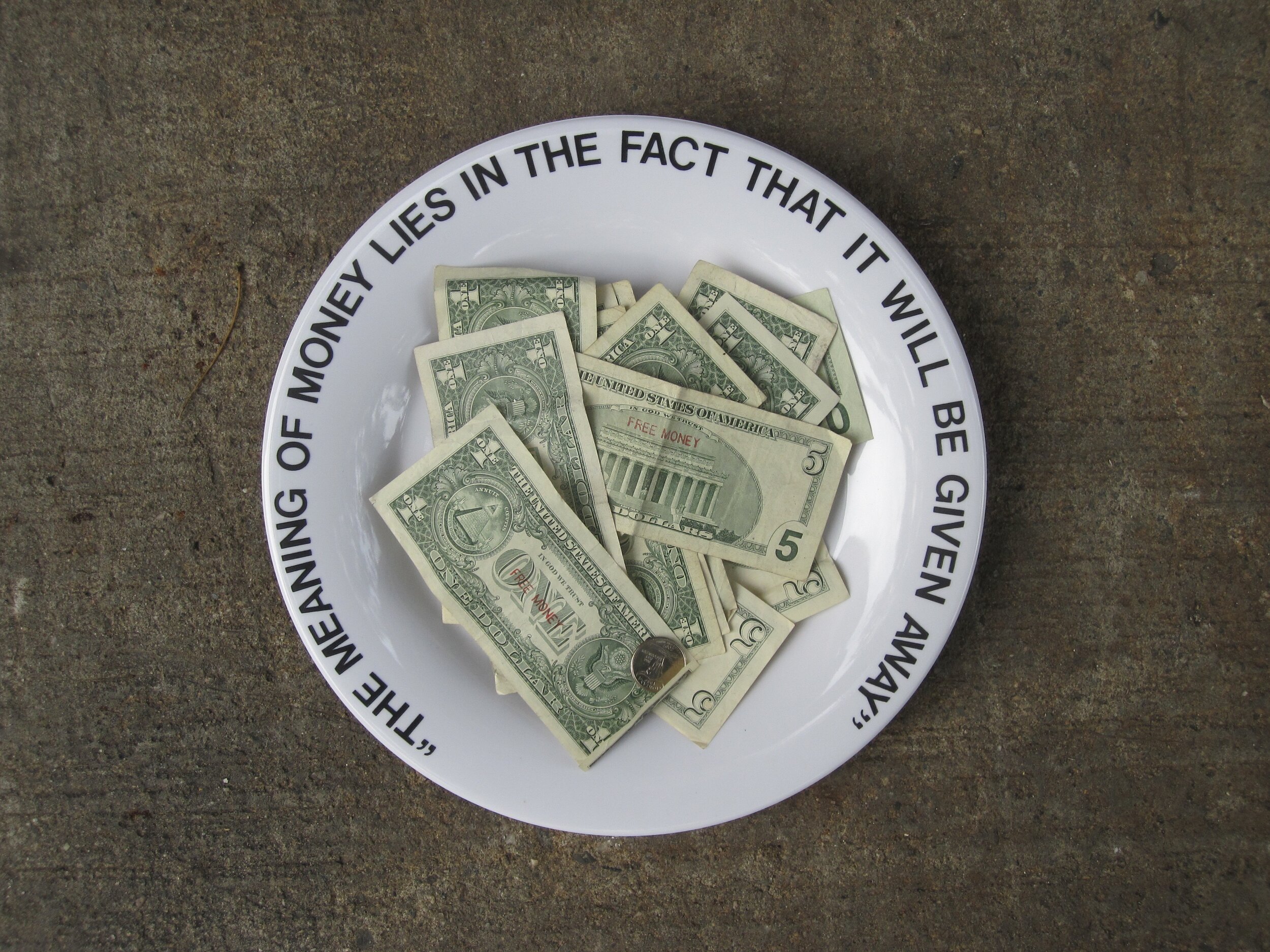
The Emancipation of Money is an experiment in circulating an alternative form of currency (the Free Dollar) among the participants of Open Engagement. With no predetermined purpose or use, the Free Dollar is designed to invite questions and provoke interactions. Hand printed “dollars” will be infiltrated into the social community in a number of ways: left for the taking on open plates, given in spontaneous acts of admiration or amusement, slipped into publications and papers, or offered on request.
The Free Dollar intentionally has no specific use. It has no denomination, no conventional value. It is not, like the Ithaca Dollar, the notes of the historic Cincinnati Time Store, or the currency of the recent Time Bank, meant to represent labor. It is closer in spirt to children’s play money, but unlike video game gold or monopoly cash which transmute effort, skill or luck into value, the Free Dollar is untethered to any particular form of reward. Free Dollars, like any kind of money, can be given, stolen, asked for or accumulated. They are peculiar in that they most likely cannot be spent. The Emancipation of Money asks: What can happen to money in the absence of that familiar act of spending?
The Emancipation of Money is part of an ongoing series of Money Actions in which Randolph has been using the social dimensions of money as the basis of an interactional and interventionist art practice. For the past several years she has given away (real) money in streets, stores, galleries, cafés, at talks, at dinners, over coffee, sometimes anonymously, sometimes in groups or person to person. Because money is caged in rules, simply acting outside these rules opens up new ranges of social action and interaction. This project for Open Engagement extends Money Actions beyond the real, into realms of play and invention. It is hoped that a purposeless form of money might offer a means of critically engaging the purposes of real money.
If you’re in Portland, join me at a Happy Hour Discussion on Alternative Economies with Stephanie Diamond, Caroline Woolard, Kathryn Kenworth, Sal Randolph
Location: Shigezo. 910 SW Salmon
[ Open Engagement ]
Birds at Emily Harvey in Soho, April 15

The Work of Art in a Stored Condition: An Exhibition of the Collection of the Emily Harvey Foundation, featuring Protocols for a Coordinated Action of “Practical Aesthesis” (including Temporary Metempsychotic Exercises, Episodes of Sustained Collective Attention, and, generally, Diligent Efforts to Air a Collection Not Often Seen) presented by Individuals Having Some Knowledge of the Rites and Rituals of the Order of the Third Bird.
Sunday, April 15, 2:30-5:30 PM.
The Emily Harvey Foundation
537 Broadway, New York
Members of the public are cordially invited to visit the Emily Harvey Foundation any time between the hours of 2:30 PM and 5:30 PM on Sunday, April 15, for the pleasure of viewing rarely seen works from the collection. A selection of such pieces will be individually unveiled, attended on, and installed in an experimental protocol of Practical Aesthesis developed by a group exploring the methods and philosophies of sustained attention peculiar to The Order of the Third Bird. The public is encouraged to join with the experimenters in offering their generous attention to the works in question.
The Order of the Third Bird
There remains some confusion about the history and practices of the body known as The Order of the Third Bird, but evidence points to its having been for some time a network of cell-like groups that engage in ritualized forms of sustained attention to works of art. The canons of secrecy around these activities—their structure and purposes—have traditionally been sufficiently restrictive as to leave some doubt as to whether any individual profession knowledge of the Order could in fact be genuinely associated therewith.
With special thanks to The Emily Harvey Foundation, The Mellon Foundation, and Kunstverein NY.

And the Winner Is... at Haverford

I’ll be at Haverford College as part of the exhibition & skee-ball tournament, And the Winner Is… (an exhibition about competition, cooperation, and community organized by John Muse & Matthew Callinan at the Cantor Fitzgerald Gallery).
Monday April 2, I’ll be giving an artists talk at 4:30 PM at the Humanities Center, Stokes 102.
Tuesday, April 3, I’ll be performing “Combat Log” in the Cantor Fitzgerald Gallery over the course of the afternoon,
Wednesday, April 4, I’ll be joining D. Graham Burnett, the Order of the Third Bird, and students to devote extremely close attention to an artwork, secretly chosen and unveiled on the spot, in Magill Library.
Combat Log
Randolph will create a “combat log” of the tournament, banging out a record of the games being played on her rickety manual typewriter. Part performance, part art-game, part drawing or poetry, her action will leave a long scroll of typed paper in its wake, a trace of what happened or might have happened. Games are ephemeral, but they leave tracks in the form of scores and statistics, recordings of images and play-by-plays. Online games like World of Warcraft automatically create textual records as you play, “combat logs,” which list every action in copious numerical detail. Scores and logs like these are relentlessly literal, yet abstract. They record only what is relevant to the outcome of the game; everything experiential is lost into memory and myth. Inspired by gaming combat logs, but also by the long typed scroll of Jack Kerouac’s On the Road, and the poems Frank O’Hara composed during his lunch hour on a sidewalk demo typewriter, Randolph will attempt the impossible task of capturing, on the fly, what is most salient about the game as it happens in real time.